RIBEYE - THE GENEROUS ROAST
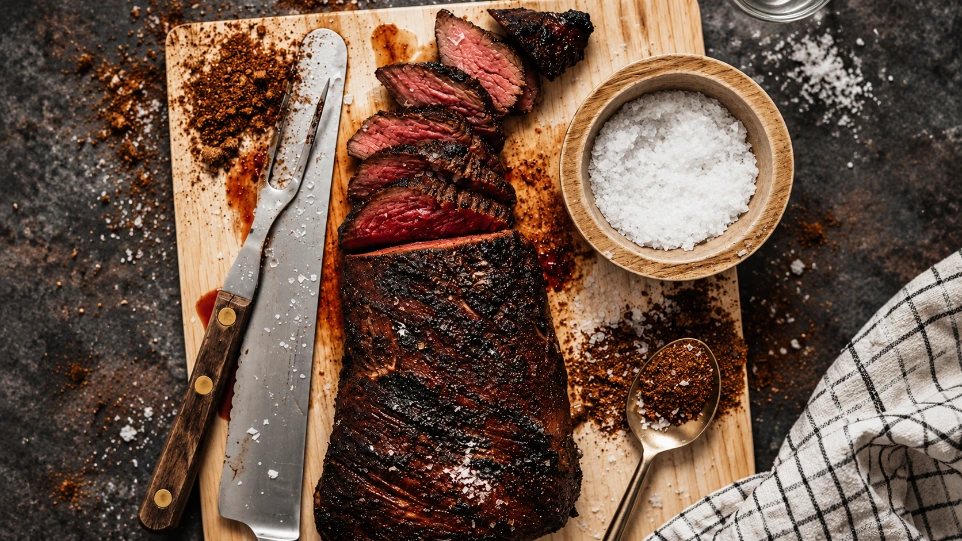
Slow-roasted ribeye
A low oven cooks boneless ribeye evenly from edge to centre. A final burst of high heat gives it the dark, savoury crust a special roast deserves.
SERVES
6 - 8
PREPARATION
20 minutes + dry brining

COOKING
1½–2¼ hours

BEST FOR
Sunday or holiday roast
WHAT YOU WILL NEED
Ingredients
- 1 boneless ribeye roast, approximately 1.5–2 kg
- 2½ tsp kosher salt
- 1½ tsp coarsely ground black pepper
- 1 tbsp neutral cooking oil
- 2 garlic cloves, finely grated
- 1 tbsp chopped rosemary
- 1 tbsp chopped thyme
- 2 tbsp unsalted butter, softened
Working with a natural whole cut
Exact cut weights vary. Adjust seasoning proportionally and use internal temperature—not only time—to guide doneness.
THE METHOD
Cook it with confidence.

Salt ahead
Pat the ribeye dry and season all over with kosher salt. Refrigerate uncovered on a rack for 12–24 hours. This seasons the roast deeply and dries the surface for better browning.

Prepare the roast
Heat the oven to 120°C / 250°F. Combine pepper, oil, garlic, rosemary, thyme and butter, then rub over the roast. Set it fat-side up on a rack in a shallow roasting pan.

Roast gently
Cook until the centre reaches approximately 60°C / 140°F, checking early because every roast differs. Remove from the oven and rest uncovered for 15 minutes while increasing the oven to 260°C / 500°F.

Finish hot
Return the roast to the hot oven for 5–10 minutes, until the exterior is deeply browned and the centre reaches at least 63°C / 145°F on a digital thermometer.

Carve across the grain
Rest for another 10 minutes. Slice across the grain into generous portions and serve with the pan juices.
MAKE IT YOURS
Use temperature rather than the clock. Shape, starting temperature and exact weight can change the roasting time substantially.
SERVE IT WITH
Roast vegetables, horseradish cream and a simple pan jus.
Cook by temperature.
Use a clean digital thermometer in the thickest part of the beef. Health Canada lists 63°C / 145°F for medium-rare pieces and whole cuts of beef. Keep raw-meat utensils and plates separate from cooked food.